Travellers don't grow old. They grow particular.
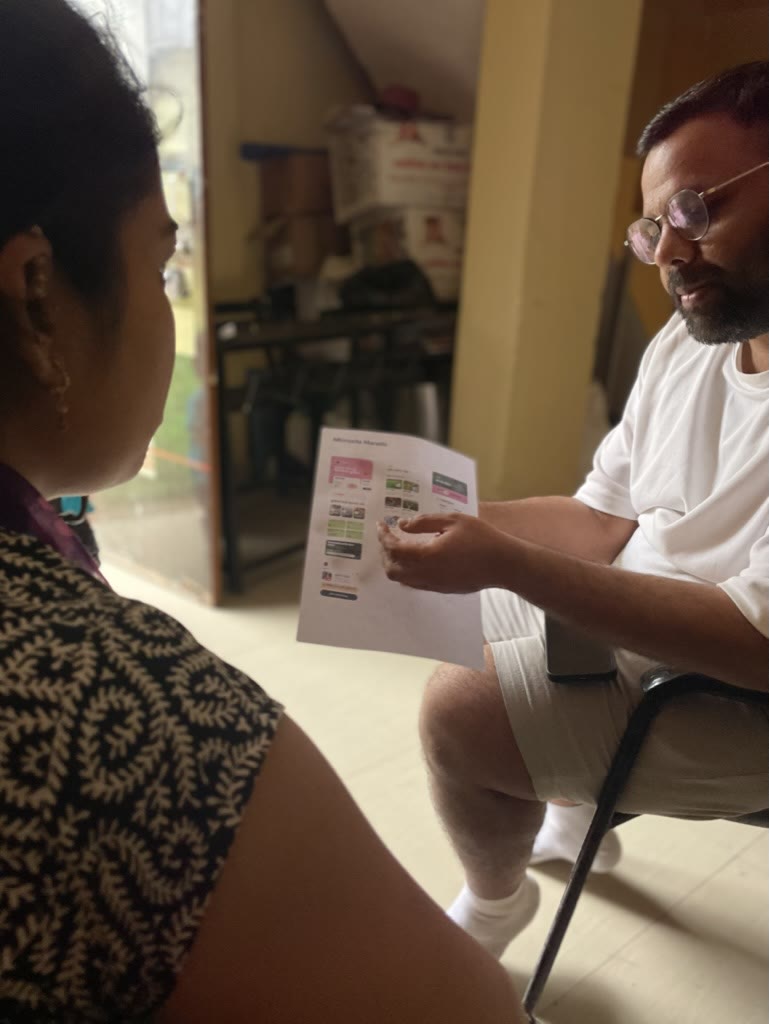
We were brought in as a synthesis and concept partner on a research programme studying how travellers over 55 move through the arc of planning, booking, and experiencing a trip. The client's research team ran in-depth interviews with travellers across the United States. We sat in as listeners, then took the raw material and made sense of it: themes, opportunities, and the design directions they pointed toward.
The work ran alongside a parallel stream on Gen Z travellers, with the goal of contrasting how different generations move through the same product.
The travellers we spoke with were doing more travelling than they ever had. They had time, they had means, and most of them had figured out exactly what they liked. That second part is the part that mattered.
The label "older traveller" landed badly across nearly every interview. "I'm not a senior in my daily life," one person told us. "Who gets to decide what older couples want to do?" asked another. The category collapsed a wide range of motivations, interests, and physical realities into one bucket, and the people inside the bucket noticed.
What was actually there was particularity. Some travellers planned around bucket lists they had been keeping for years. Some travelled to be with family. Some wanted to be guided through everything. Some wanted to disappear into a country alone with a map. Accessibility, when we asked about it, came back as a spectrum, not a binary. "I'm not a spring chicken, but I'm also not wheelchair bound," one traveller said, naming a middle that products tend to flatten.
The other pattern we kept finding was about where the dreaming happened. By the time travellers reached a search surface, the trip was already half-formed in their heads. The product wasn't where the trip began. It was where the trip got real.
These insights pushed our concept work in a particular direction.
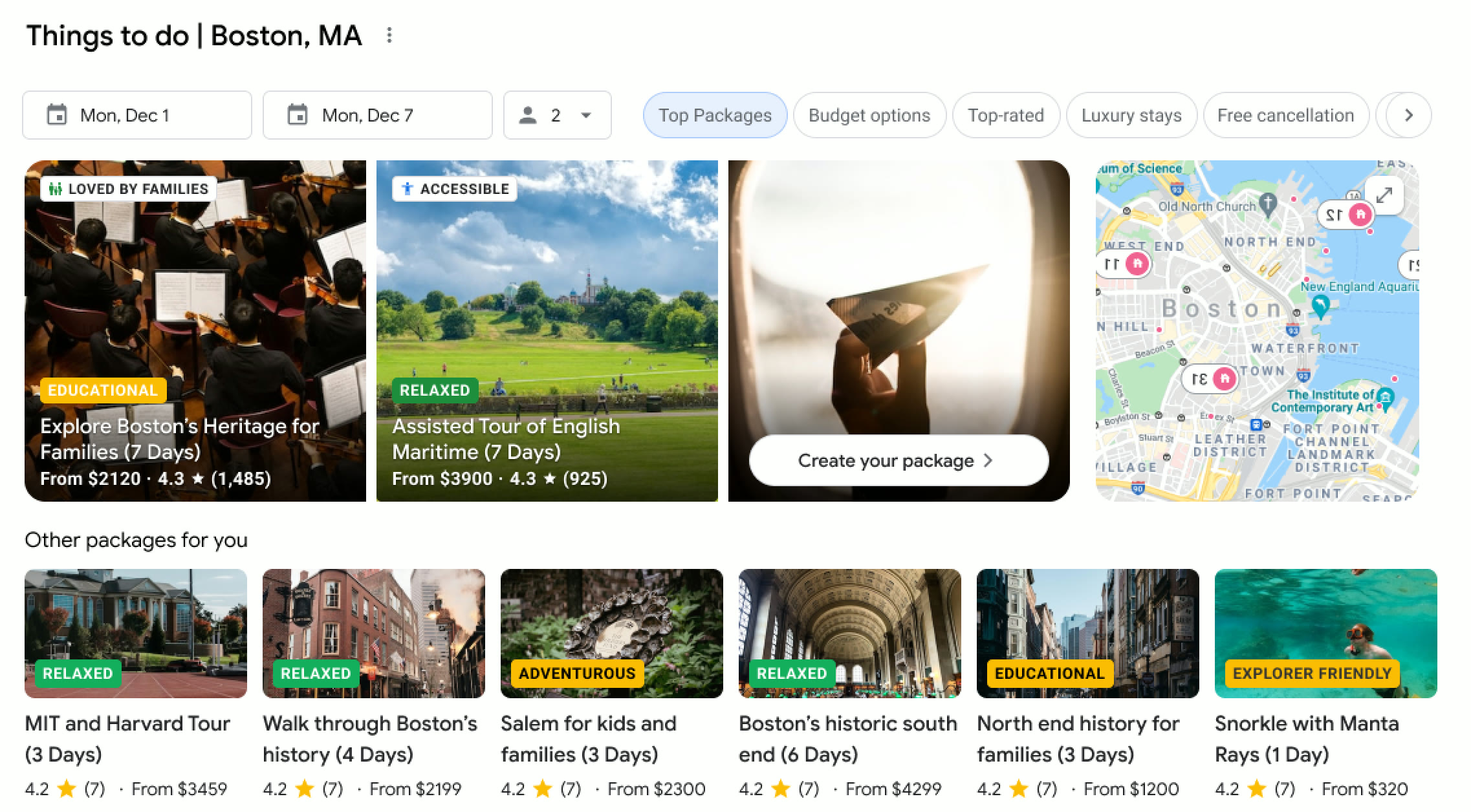
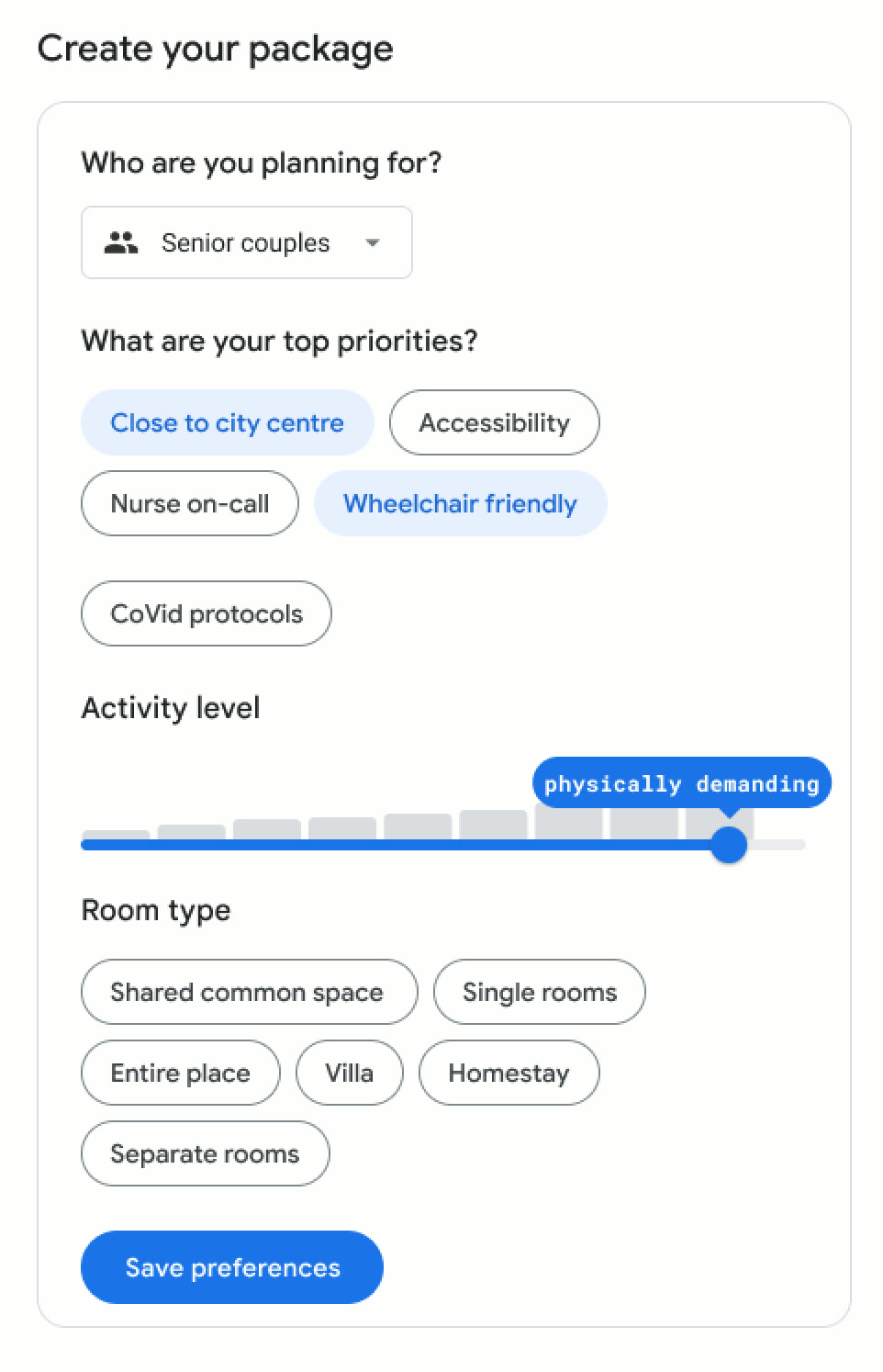
Identifiers built around lifestyle, not age. Instead of asking travellers what life stage they belonged to, we prototyped flows that asked what kind of trip they were planning, how active they wanted it to be, how much guidance they wanted, what kinds of experiences they were after. The shift was small in interface terms and large in what it implied: the product was no longer trying to file the user, it was trying to understand them.
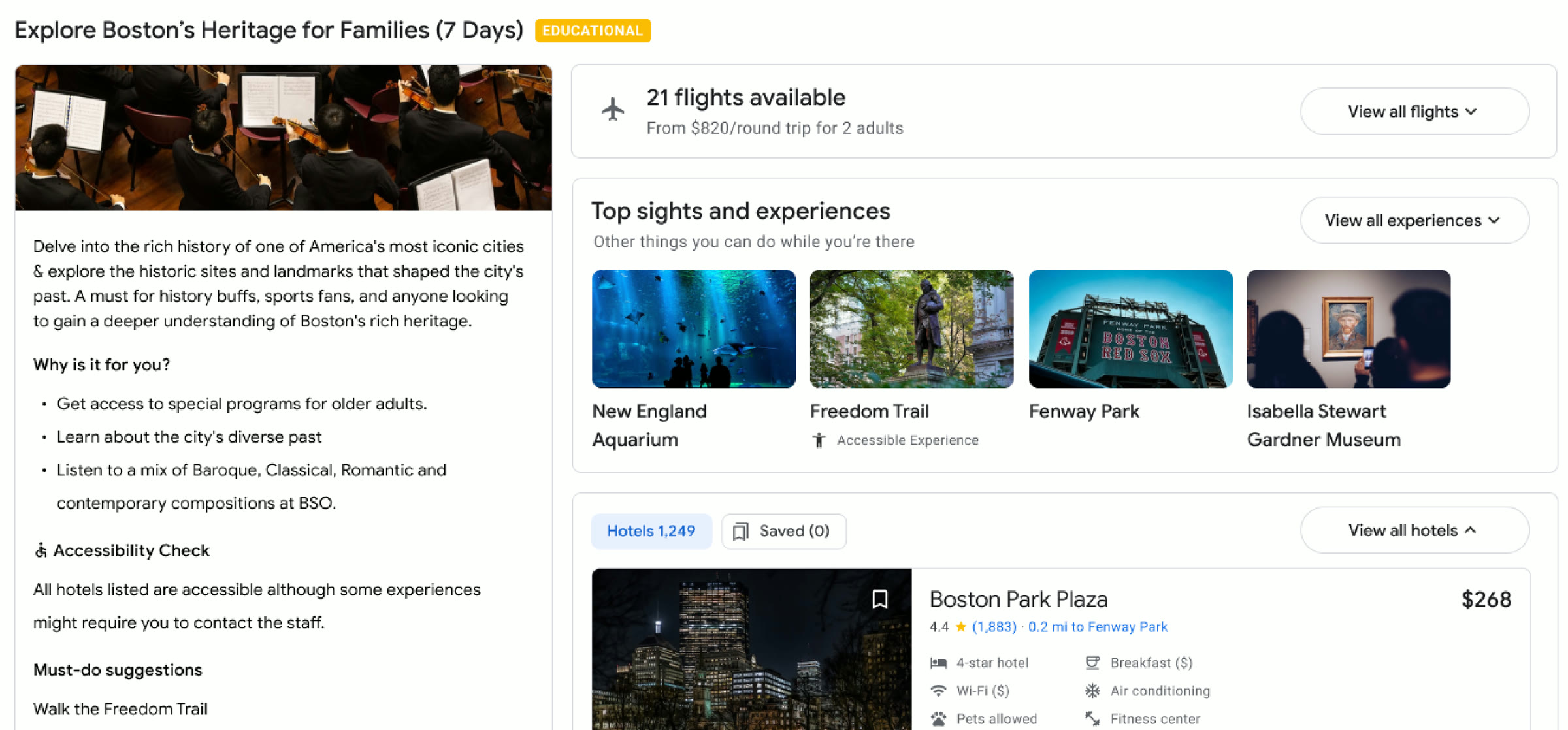
Packages reframed as editable templates. Travellers rejected packages as rigid, but missed the convenience packages were supposed to provide. We tested a concept that treated the package as a starting point, not a transaction, but a flexible framework where dates, accommodation, activities, and intensity could all be adjusted before booking. "I have not seen anything like this. You should be able to plan," one traveller told us.
Bucket lists as planning anchors. For travellers who had been keeping mental lists for years, we prototyped a way to make the list a first-class object inside the planning experience. Saved destinations, tagged interests, returnable searches: "Sleep under the stars" as an item the product could recognise and build a trip around.
Accessibility as granular options, not a checkbox. Wheelchair-accessible rooms, visual aids, auditory guidance, low-mobility-friendly tours, each surfaced as its own filter, on the basis that "accessible" alone hides more than it reveals.
These were design directions, not finished products. A set of concepts the client team could test, build on, or argue with as they shaped what came next.
This project taught us to mistrust demographic categories in research. They are convenient, but they almost always obscure the variation that actually matters. The honest move is to design for what people want, not for what their age suggests they should want.
Particularity is harder to design for, but it is what is actually there. The products that take this seriously will earn the loyalty of an audience that has, for years, been spoken to in the wrong language.